
For three years, headlines have warned that AI will empty offices. The data on AI and jobs tells a calmer story.
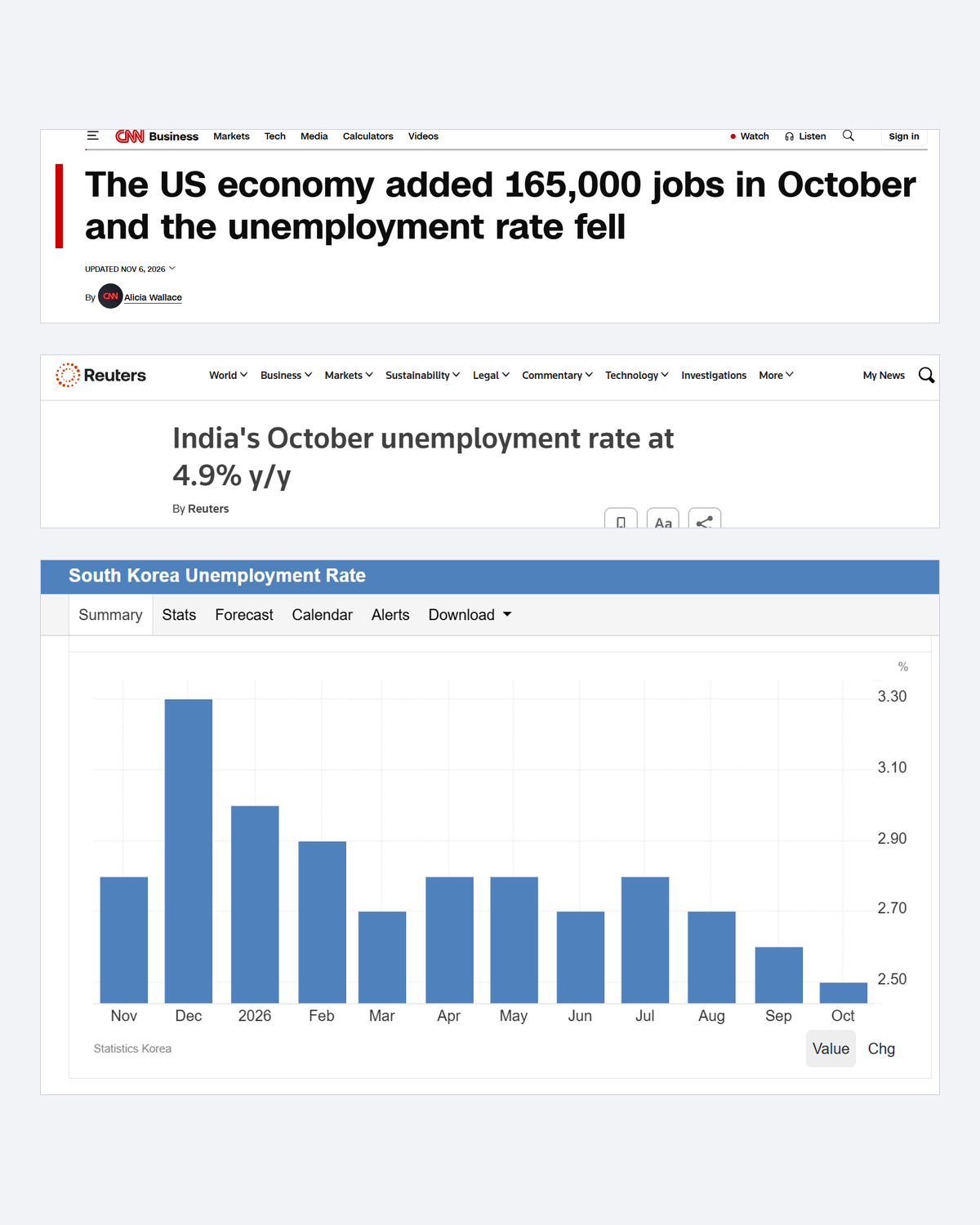
In October 2026, US employers added 165,000 jobs, according to the Bureau of Labor Statistics. Economists had expected about 65,000. Unemployment fell to 4.1%, down from 4.2% in September.
That is not what a labour market in freefall looks like. AI is changing work. It is not ending it.
The US jobs data: AI and jobs are coexisting
The sector most often named as at risk from AI is white-collar services. Yet professional and business services led October’s gains with 70,000 new jobs, according to Fox Business. That was well above the sector’s monthly average of 15,000 over the previous year.
The picture is not perfect. The broader U-6 measure, which counts involuntary part-time work, rose from 7.6% to 7.9%. Wage growth of 3.1% also trailed inflation. These are real pressures. But they point to a mixed economy, not mass replacement by machines.
The most careful studies reach a similar conclusion. AI has not yet caused broad job losses.
The Federal Reserve Bank of Cleveland looked at how often workers leave their jobs. It found no consistent evidence of higher separation rates in AI-exposed occupations.
A CESifo working paper studied recent US graduates, a group often described as most at risk. Their summer 2026 unemployment rate was 7.3%, within the range of the previous four years, according to TechSpot.
The honest caveat: entry-level hiring
One signal deserves attention. Stanford’s Digital Economy Lab found no evidence of economy-wide displacement. But it did find weaker employment for workers aged 22 to 25 in AI-exposed roles.
The Cleveland Fed adds a useful detail. Exposed workers are not losing jobs faster. They are taking longer to find new ones. This matters for leadership pipelines. Fewer junior roles today can mean thinner benches of managers in ten years. It is a slower hiring story, not a mass layoff story.
The global picture is steady too
The pattern holds beyond the US. The OECD Employment Outlook 2026 reports that employment across member countries reached 670 million in May 2026. The OECD-wide unemployment rate was 4.9%. It has stayed at or below 5% for more than four years.
The OECD’s executive summary offers one explanation. AI adoption is still relatively low, and companies have so far preferred voluntary workforce adjustments. Any negative effects may take time to appear.
Europe shows a similar resilience. Euro area unemployment was 6.5% in September 2026, according to Eurostat. That is up from 6.3% a year earlier, but close to the record low. The OECD’s June outlook pointed to an energy shock as the main pressure on growth this year.
For boards in the Middle East, Africa and India, the lesson is similar. Young, growing workforces face a different set of pressures from ageing Western economies. But nothing in the global data supports panic.
What this means for boards and founders
The real question is not whether AI will take every job. It is how roles, teams and companies will change shape.
Three practical points stand out:
- Plan for redesign, not replacement. Most roles will absorb AI tools before any disappear.
- Protect the leadership pipeline. If junior hiring slows, invest deliberately in developing future managers.
- Hire leaders who can adapt. The most valuable executives will combine sector judgement with comfort using new tools.
A gradual shift, and a return to smaller businesses
AI will certainly change the types of roles companies need. It will also change the size of businesses. But the change will be gradual.
One early sign is already visible. US business applications reached 5.7 million in 2025, according to The New York Times. That is the highest in two decades of Census tracking. Applications from one-person businesses rose by more than 20% between early 2025 and mid-2026. That finding comes from Nasdaq research reported by Axios. Nasdaq linked that surge to advances in AI.
We may end up with many more small businesses. Small teams, using AI, could profitably serve niche markets that large companies overlook.
In one sense, that would be a return to an older model. Before the industrial revolution, most work happened in small workshops and family enterprises. They served local and specialist markets. Industrialisation rewarded scale. AI may reward focus again.
That future will need a new kind of leader. Founders and boards will need people who can build lean teams and solve for smaller markets.
If you are planning for that shift, get in touch with our team.