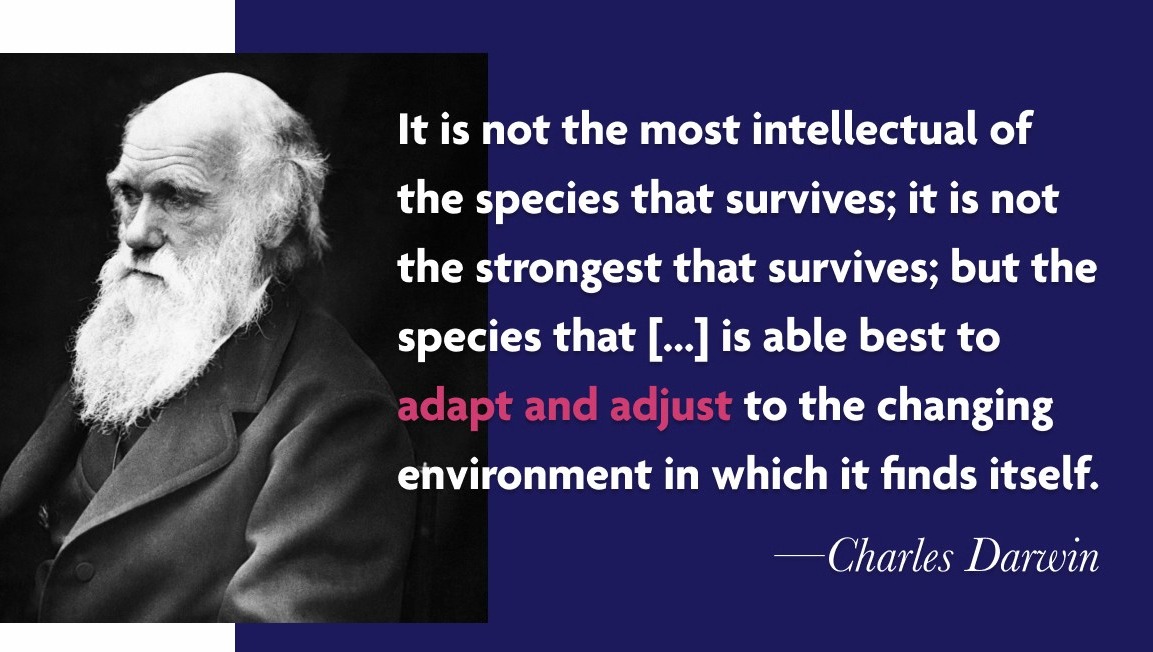

Every external shock — an oil price spike, a currency devaluation, a shipping disruption, a regulatory upheaval — runs an unplanned assessment of your leadership team. It’s not one you scheduled, and it’s not one you can prepare candidates for in advance. But it tells you, with more clarity than almost any formal review, exactly who your leaders are under pressure.
These patterns are consistent across the shocks businesses in Africa, India, and the Middle East have absorbed in recent years: some leaders lean in. Some disappear. Some are still waiting to be told what to do. And the leaders who perform in calm conditions are not always the ones who perform when the environment turns hostile.
The Gap Is Human, Not Strategic
Crisis decision-making speed is one of the strongest differentiators between organisations that recover quickly from disruption and those that stall. That gap rarely sits in strategy. It sits in the quality of the people at the top of the business.
The leaders who navigate disruption well tend to share specific behaviours;
- Communicate frequently and with real transparency — telling their teams what they know, and just as importantly, what they don’t know yet.
- Make swift, reversible decisions rather than waiting for perfect information that will never arrive.
- Protect their best people aggressively, because talent lost during a downturn rarely comes back.
Leaders who falter tend to do the opposite: going quiet, slowing every decision, holding the organisation in suspended animation while waiting for a certainty that isn’t coming.
Leadership in Action: Ford, 2006–2009
When Alan Mulally arrived at a near-bankrupt Ford facing $12.7 billion in annual losses, his first intervention was behavioural, not financial. He introduced weekly Business Plan Review meetings where every executive colour-coded their projects green, yellow, or red. When one SVP displayed the first red flag — a potential product launch failure — Mulally’s response was reportedly to welcome the visibility rather than criticise it. Within weeks, every leader was surfacing problems early instead of letting them fester in silence. Ford became the only major US automaker to survive the 2008 financial crisis without a government bailout, turning a $6.6 billion profit within three years of its near-collapse. The differentiator wasn’t strategy. It was the speed at which truth could travel upward through the organisation.
Resilience Is a Capability, Not a Personality Type
Leaders who thrive in disruption share a specific profile: they tolerate ambiguity without becoming paralysed, make decisions with incomplete information, hold the anxiety of their organisation rather than passing it down, and communicate a credible narrative about the future even when the present is difficult.
This is learnable. Adaptive leadership behaviours can be built through deliberate practice, coaching, and structured exposure to ambiguous decision-making — but only where that development is intentional, built into how you select leaders, how you develop them, and how you create the conditions for them to practise before the next crisis arrives.
Research on managerial resilience consistently finds that psychological safety and managerial trust are among the strongest predictors of team performance under pressure — more predictive than compensation, seniority, or functional expertise. Organisations that build these conditions before a crisis retain both performance and people through it.
Three Questions Worth Asking This Quarter
1. Identify your signal performers. Which three or four leaders are performing above expectation under current pressure — and do you understand precisely why? Their behaviours are the template for your next-generation capability framework.
2. Audit your leadership development agenda honestly. Does it reflect disruption readiness, or simply functional excellence? Most leadership development was designed for stable growth environments. If it doesn’t include ambiguity tolerance, crisis communication, and adaptive decision-making, it isn’t built for the decade ahead.
3. Have the honest conversation at ExCo level. Where are the capability gaps most exposed — not the version polished for the board, the real one? Which roles are at risk if the incumbent cracks under sustained pressure? Where is succession depth genuinely thin?
The leaders who define your organisation over the next several years are being shaped by how they’re navigating pressure right now. The only real question is whether that process is accidental or intentional.
Select Global Solutions works with boards, CEOs, and CHROs across Africa, India, and the Middle East to assess and strengthen leadership benches before the next shock arrives. Get in touch for a confidential conversation.